After
0 copies
Preview
Terminal
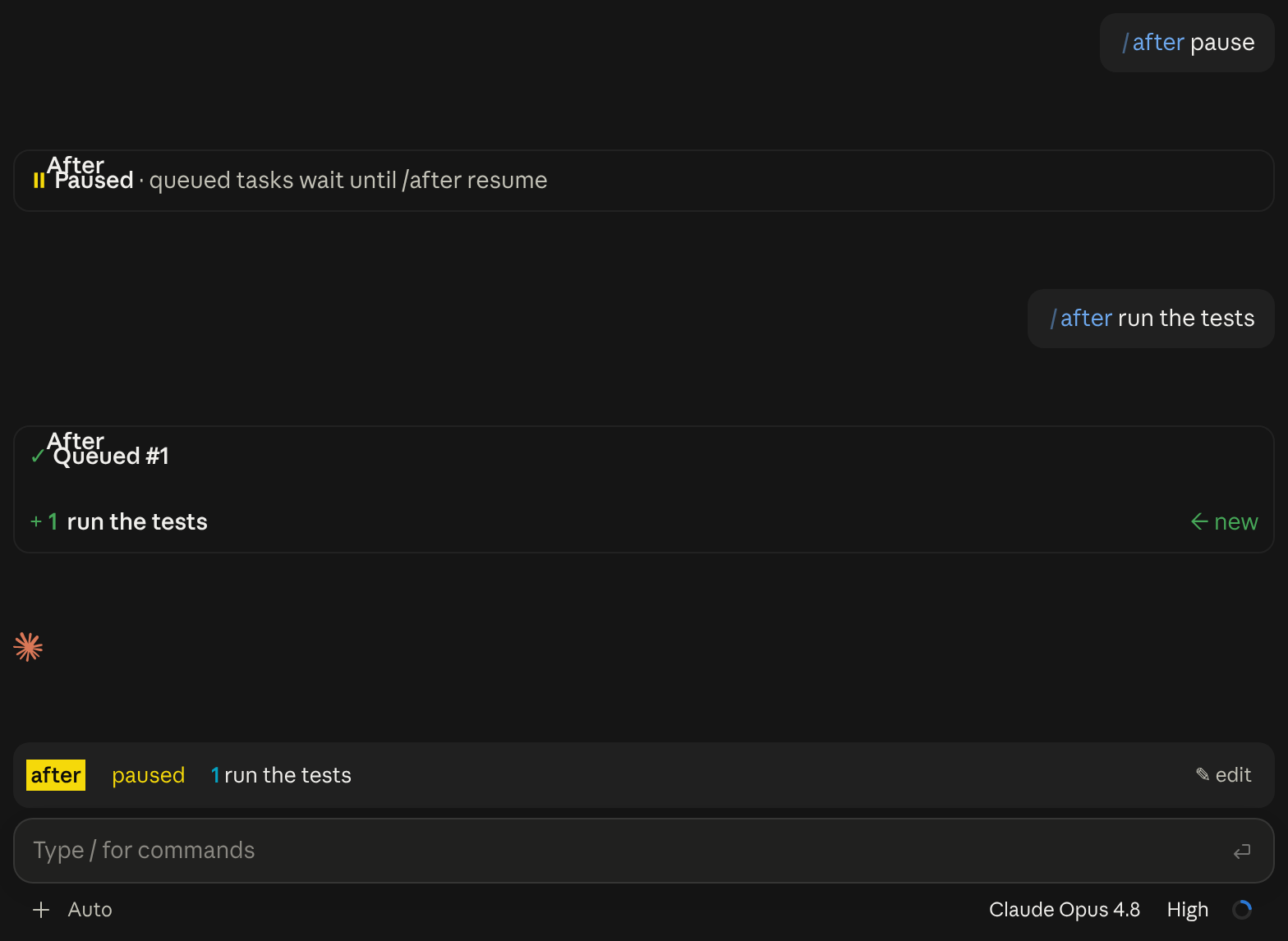
❯ /after
╭─ After ──────────────────────────────────────────╮
│ ⏸ Paused · queued tasks wait until /after resume │
╰──────────────────────────────────────────────────╯
❯ /after
╭─ After ──────────────────────────────────╮
│ ✓ Queued #1 │
│ │
│ + 1 run the tests ← new │
╰──────────────────────────────────────────╯
after paused 1 run the tests ✎ edit [-]
❯ Claude Desktop
What it does
A task queue for Claude Code: /after <task> runs a task once the current one is done, without steering it. A band above the prompt shows what runs now and next.
- What you see
- A queue band above the prompt, cards and an edit pane
- Works in
- Terminal and Claude Desktop
- Slash commands
- /after, /before
- Uses your tokens
- Haiku resolves /after text that may refer to queued tasks
- Changes files
- Nothing
- Network access
- None
- Reviewed commit
- c2ee6a4
- Preview recorded with
- Claude Code 2.1.296
How it works
- /after and /before run at once, even mid-turn, and answer with a card of what changed.
- Keeps queued task text out of what the model sees until that task's turn.
- When a turn ends normally, submits the next queued task as your own message.
- Shows the queue in a band above the prompt; bare /after opens it for keyboard edits.
Good to know
- Needs Claude Code 2.1.289 or newer.
- smart (on by default) sends the command and queued task texts to Haiku to resolve references.
- Esc stops the running task, not the queue. /after pause holds the queue until /after resume.